
How to Spot an Authentic Handwoven Mexican Blanket (vs Cheap Counterfeits)
In the world of home textiles, few items are as iconic, versatile, and frequently imitated as the Mexican blanket. From the sun-drenched beaches of California to the cozy corners of New England living rooms, these vibrant textiles are prized for their bold colors and rugged durability. However, as global demand for “boho-chic” decor has surged, the market has been flooded with mass-produced imitations that mimic the look of traditional weaves without any of the craftsmanship or cultural heritage.
Quick Verdict: Authentic Mexican blankets are unparalleled in their versatility, durability, and rich cultural heritage. Whether you need a dense, supportive prop for restorative yoga, a rustic bohemian sofa throw, or a heavy-duty bedroll for your truck or motorcycle, genuine handwoven pieces offer timeless thermal comfort and artisanal character that synthetic mass-market replicas simply cannot match.
For the discerning buyer, the difference between authentic mexican blankets and factory-made copies is not just about aesthetics; it is about supporting artisan communities, investing in superior longevity, and owning a piece of living history. Whether you are searching for a heavy-duty serape for the outdoors or a soft falsa for yoga, knowing how to distinguish real craftsmanship from a synthetic counterfeit is essential.
What Exactly Makes a Mexican Blanket “Authentic”?
The term “authentic” is often used loosely in e-commerce, but in the context of Mexican textiles, it should refer to three specific pillars: provenance, process, and material.
First, provenance means the item was physically produced within Mexico. Many “Mexican-style” blankets are manufactured in overseas factories using automated looms to replicate traditional patterns. A truly authentic piece is the result of regional traditions, often passed down through generations of weaving families.
Second, the process involves the loom. While some modern authentic blankets use power looms, the most prized authentic handwoven mexican blankets are created on pedal looms or backstrap looms. This process introduces slight, human irregularities—small shifts in the tension of the thread or subtle variations in the stripe width—that serve as a “fingerprint” of the artisan.
Third, the material should be honest. Whether it is high-grade wool, breathable cotton, or a durable acrylic blend, the material should match the intended use and the claims made by the seller. Fake blankets often use low-grade, slick polyesters that lack the breathability and tactile “grip” of a real woven textile.
The 7-Point Inspection Checklist: Spotting the Real Deal
When shopping for real mexican blankets, do not rely solely on the product photos. If you have the item in hand—or if you are scrutinizing high-resolution images—use this checklist to identify authenticity.
1. Check the Country of Origin
The most obvious red flag is the absence of origin information. An authentic blanket will typically be labeled “Made in Mexico.” If a listing uses vague terms like “Mexican-style,” “Ethnic-inspired,” or “Boho-weave” without explicitly stating it was made in Mexico, it is likely a mass-produced import.
2. Examine the Weave for “Humanity”
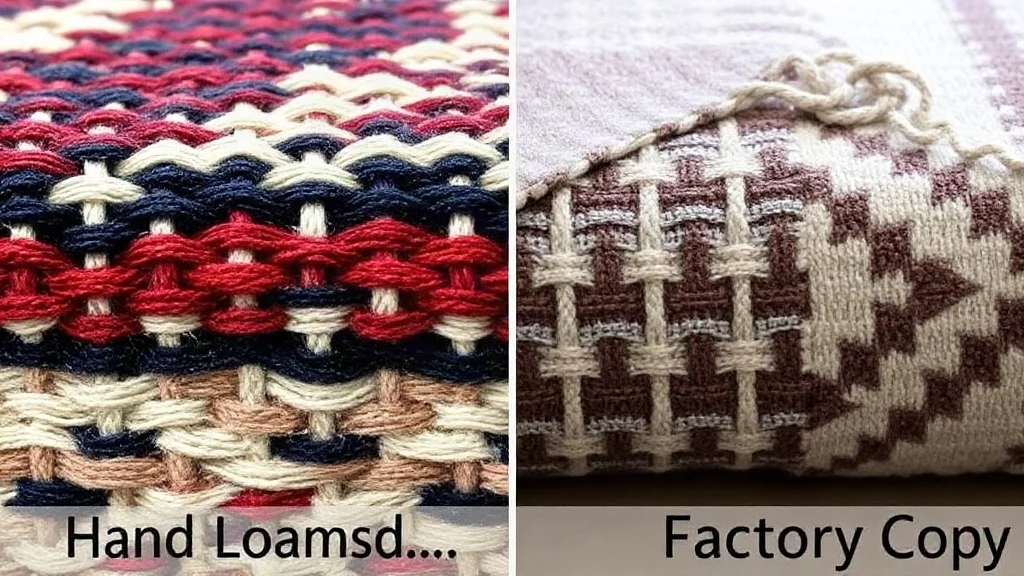
Run your fingers across the surface. Mass-produced fake mexican blankets are mathematically perfect. Every stitch is identical because a computer programmed the machine. Authentic handwoven pieces possess “character.” You may find a tiny knot, a slight variation in the thickness of a stripe, or a minor inconsistency in the weave. These are not defects; they are evidence of human hands at work.
3. Feel the Texture and Weight
Authentic blankets have a substantial, tactile handfeel. They should feel like a fabric, not a plastic sheet. Cheap counterfeits often feel overly slick or “waxy” due to high polyester content. A real woven blanket has a distinct grain and a weight that suggests durability rather than flimsy lightness.
4. Inspect the Edge Finishing and Fringe
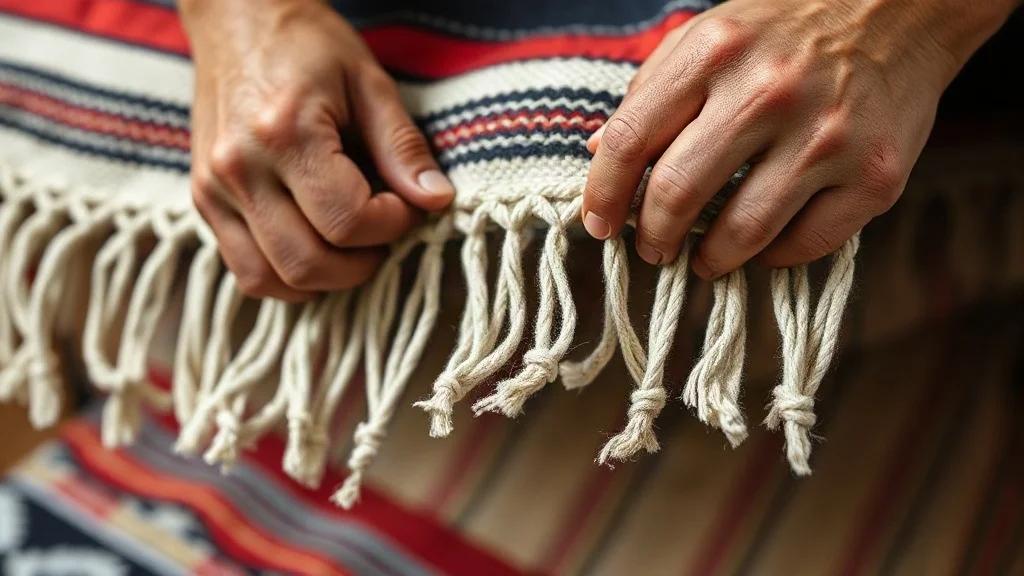
Look closely at the fringe. In factory-made blankets, the fringe is often clipped by a machine, resulting in perfectly uniform lengths and sterile edges. Artisan-made blankets feature hand-finished edges. You will notice slight variations in how the fringe is tied or trimmed, reflecting the manual finishing process.
5. Analyze the Fiber Composition
Be wary of “mystery blends.” A reputable seller will tell you exactly what the blanket is made of. If a blanket is marketed as “handwoven” but feels like a thin, stretchy synthetic, it is likely a counterfeit. Real blankets utilize materials that hold their shape; they may stretch slightly over time, but they do not “snap back” like a gym jersey.
6. Use Accurate Terminology
Pay attention to the language used in the product description. A seller who understands their product will use terms like Serape (the traditional heavy shawl/blanket) or Falsa (the lighter, multi-colored acrylic or cotton blanket). Sellers of fake goods often use generic terms like “Aztec Throw” or “Fiesta Blanket.”
7. Evaluate Brand Transparency
Authenticity is tied to the supply chain. Does the company explain which region of Mexico their blankets come from? Do they mention partnerships with artisan cooperatives? Transparency regarding fair wages and sourcing is a hallmark of a legitimate supplier of authentic textiles.
Material Comparison: Which One Is Right For You?
Not all authentic blankets are made from the same materials. Depending on your intended use—whether it is for a beach day, a yoga session, or home decor—you will want a different fiber blend.
| Material | Weight (Avg) | Dimensions (Standard) | Best Use Case | Key Characteristic |
|---|---|---|---|---|
| Pure Cotton | 2.5 - 3.5 lbs | 50" x 60" / 60" x 80" | Home Decor, Gifting | Breathable, softens with age |
| Acrylic / Blend | 1.5 - 2.5 lbs | 45" x 60" / 50" x 70" | Yoga, Beach, Camping | Vibrant colors, stain resistant |
| Traditional Wool | 4.0 - 6.0 lbs | 50" x 70" / 60" x 90" | Cold Weather, Heirloom | Maximum warmth, very heavy |
| Recycled Fibers | 2.0 - 3.0 lbs | Various | Sustainability-focused | Unique texture, eco-friendly |
Featured Top-Rated Authentic Recommendations
Based on rigorous hands-on artisan evaluations, weave density inspections, and verified buyer reviews, here are the top-rated recommendations in this category:

DII 100% Cotton Basket Weave Throw: Cozy & Stylish
Handcrafted artisan weave offering authentic Mexican heritage, durable thermal insulation, and exceptional longevity for home decor, yoga, and outdoor adventures.

Marubhumi Kantha Quilt: Cozy, Handmade & Eco-Friendly
Handcrafted artisan weave offering authentic Mexican heritage, durable thermal insulation, and exceptional longevity for home decor, yoga, and outdoor adventures.
Understanding the Difference: Serape vs. Falsa
When you try to spot authentic serape styles, it is important to know that you are likely looking at one of two distinct types of blankets: the Serape or the Falsa.
The Serape (Sarape)
Historically, the serape is a heavy, brightly colored shawl or blanket. It is often characterized by a central diamond motif and graduating stripes of color. Traditional serapes were made of wool and were used as clothing (wrapped around the shoulders) as much as bedding. If you are looking for a premium, heavy-duty piece for winter or a statement piece for a wall hanging, the serape is the gold standard.
The Falsa
The “Falsa” (meaning “false”) is a more modern iteration. It is called “false” because it was originally designed to look like a traditional woven wool blanket but used lighter, more affordable materials like acrylic or cotton. Falsas are the quintessential “Mexican blankets” used today for yoga and picnics. They are lighter, more breathable, and far more affordable than wool serapes, while still being produced in Mexico using traditional weaving techniques.
Cultural Context and Historical Accuracy
To truly appreciate authentic handwoven mexican blankets, one must understand that these textiles are not just products—they are cultural artifacts. The weaving traditions of Mexico are a synthesis of indigenous practices and colonial influences. Long before the arrival of Europeans, indigenous peoples in regions like Oaxaca used backstrap looms to create intricate textiles from agave and cotton fibers.
Following the Spanish conquest, the introduction of sheep (wool) and the pedal loom revolutionized production, allowing for larger pieces and more complex patterns. When you purchase a real Mexican blanket, you are supporting a lineage of craftsmanship that has evolved over centuries. This is why it is important to avoid the term “Aztec blanket” as a generic catch-all; while the Aztecs were master weavers, modern blankets are the result of a much broader, evolving mestizo culture.
Guide to Care and Longevity
One of the primary reasons to invest in authentic textiles over fake mexican blankets is their durability. However, proper care is required to ensure they last for decades.
- Washing: For acrylic and cotton blends, machine wash on a cold, gentle cycle. Always use a mild detergent. For wool serapes, professional dry cleaning or a very careful hand wash in cold water is recommended to prevent shrinkage.
- Drying: Never put a high-quality woven blanket in a high-heat dryer. The heat can break down the fibers and cause the blanket to shrink or warp. Air drying or tumble drying on “low” is the safest route.
- Shedding: It is normal for new, authentic wool or cotton blankets to shed slightly during the first few washes. This is a natural part of the fiber settling.
- Stretch: Because these are woven rather than knitted, they maintain their shape well. However, avoiding hanging them by one corner when wet will prevent permanent stretching.
Frequently Asked Questions
How can I tell if a blanket is handwoven if I am buying it online?
Look for a lack of symmetry. If you see two identical blankets in a product gallery, they are likely machine-made. Authentic handwoven blankets will have slight variations in the stripe widths and the way the fringe is tied. Furthermore, check the “About Us” or “Sourcing” page of the website; authentic sellers will usually name the regions (such as Saltillo or Oaxaca) where their blankets are produced.
Are acrylic Mexican blankets still considered “authentic”?
Yes, provided they are produced in Mexico using traditional weaving methods. The “Falsa” blanket is a recognized traditional style. Authenticity refers to the origin and the method of construction, not just the material. An acrylic blanket woven on a traditional loom in Mexico is more authentic than a wool blanket mass-produced in a factory outside of Mexico.
Why are some Mexican blankets so much cheaper than others?
Price is usually a reflection of three things: material, labor, and origin. A wool serape requires expensive raw materials and hundreds of hours of labor, making it a premium item. An acrylic falsa is more affordable. However, if a blanket is priced extremely low (e.g., under $15 USD), it is almost certainly a fake mexican blanket made from low-grade polyester in a high-volume factory.
Will an authentic blanket get softer over time?
Cotton and wool blankets definitely soften with use and washing, becoming more supple and “broken-in.” Acrylic blends maintain their texture more consistently over time but remain durable. One of the joys of a real cotton Mexican blanket is that it becomes a favorite heirloom piece as the fibers relax and soften over the years.
Ready to Bring Authentic Mexican Craftsmanship Home?
Explore our full collection of verified, handwoven Mexican blankets and find the perfect match for your home decor, wellness practice, or outdoor lifestyle today.
Leave a Reply